
The Role of Marketing People and Sales Team in the Sales and Marketing Department
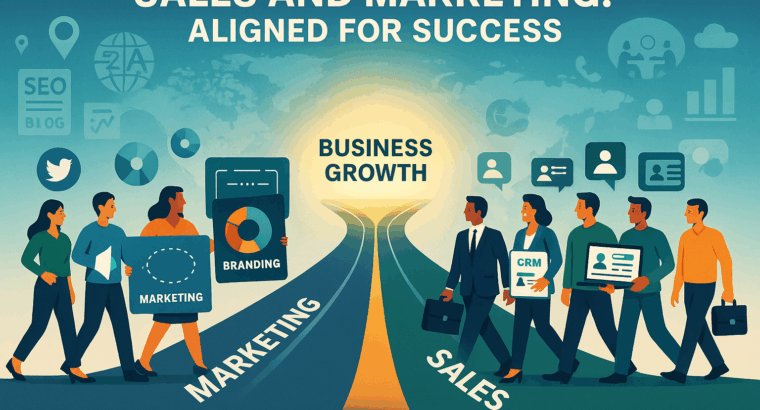
In today’s hyper-competitive, digitally connected marketplace, many companies—especially SMEs and startups—fail to differentiate between marketing and sales roles. This misunderstanding often leads to disorganized strategies, duplicated efforts, and missed revenue opportunities.

Sales and Marketing: Not the Same, but Deeply Connected
Before we explore individual responsibilities, let’s bust a common myth:
“Sales and marketing people do the same job.”
Wrong.
While both departments aim for the same goal—revenue generation—their paths, timelines, and approaches are very different.
✅ What Does the Marketing Team Do?
The marketing team focuses on demand generation, branding, and lead attraction. Their job starts much earlier than a sales conversation begins.
Key Responsibilities of Marketing People:
- Market Research
Identify target audiences, buying behaviors, global/local market trends, and competitor positioning. - Branding and Messaging
Define how the company is perceived globally and locally. Design brand identity, voice, tone, and visuals. - Digital Marketing Strategy
SEO, content marketing, PPC, email marketing, and social media campaigns to create awareness and generate leads. - Lead Generation and Nurturing
Use CRMs, landing pages, whitepapers, and drip campaigns to nurture potential buyers before sales engagement. - Analytics and Performance
Monitor campaign KPIs, engagement rates, and conversion rates. Optimize strategies based on insights.
✅ What Does the Sales Team Do?
Key Responsibilities of Sales People:
- Lead Qualification
Evaluate which marketing-generated leads are worth pursuing based on budget, authority, need, and timeline (BANT). - Relationship Building
Build rapport with prospects, understand pain points, and offer solutions tailored to their needs. - Product Demonstrations
Provide technical or value-based presentations to decision-makers. - Negotiation and Closing
Negotiate pricing, terms, and close deals—turning leads into revenue. - After-Sales Support and Upselling
Maintain relationships post-purchase to encourage loyalty, repeat business, and referrals.
????Why It Matters to Understand the Difference Between Marketing and Sales Teams
Many companies treat sales and marketing as one team, or worse, use the titles interchangeably. This is a critical mistake that leads to poor performance, misaligned goals, and missed growth opportunities.
Understanding their distinct roles is essential for a business to scale efficiently, both locally and globally.
1. Clarity Creates Focus
If your teams know their responsibilities:
- Marketing focuses on attracting and nurturing potential customers.
- Sales focuses on converting and closing those prospects.
Without this clarity, your team wastes energy doing tasks outside their scope, which leads to confusion, inefficiency, and poor results.
2. Better Strategy and Execution
A marketing team that’s measured by revenue will focus on short-term campaigns.
A sales team judged on website traffic will focus on the wrong KPIs.
When you separate roles correctly, both teams can:
- Use the right tools (CRMs vs. SEO platforms)
- Build complementary strategies
- Work together more productively
3. Aligned Goals Drive Growth
Understanding the distinction helps you:
- Set correct KPIs (MQLs for marketing, win rate for sales)
- Create proper feedback loops
- Optimize the full customer journey from awareness to after-sale
Aligned teams close more deals and create better customer experiences.
4. Improved Customer Experience
Customers don’t want to be sold to before they understand the value.
Marketing creates awareness and trust.
Sales adds personalized value and solves problems.
Without a clear division:
- Leads may get pushed too early
- Sales may not understand the buyer’s journey
This hurts conversion and damages trust.
5. Scalable, Repeatable Growth
If your team understands where marketing ends and where sales begins, you can:
- Train faster
- Scale globally
- Automate better
- Track performance by stage
This sets the foundation for sustainable, repeatable growth.
???? How Sales and Marketing Work Together
Sales and marketing aren’t silos—they’re strategic partners.
| Marketing | Sales |
|---|---|
| Attracts leads | Converts leads |
| Builds brand | Builds trust |
| Analyzes traffic | Analyzes pipeline |
| Nurtures through content | Nurtures through contact |
| Focus: long-term growth | Focus: short-term targets |
A well-aligned team can shorten sales cycles, increase ROI, and improve customer satisfaction. Integration tools like HubSpot, Salesforce, and Zoho CRM are widely used to bridge the gap between both departments.
❌ Common Mistakes Due to Misunderstanding
- Hiring One Person to Do Both Jobs
Often in startups, one person is expected to generate leads, manage ads, nurture them, and close deals. This leads to burnout and poor outcomes. - No Feedback Loop
Sales teams don’t report back on lead quality, and marketing continues targeting the wrong personas. - Wrong KPI Metrics
Measuring marketing success by sales volume or sales success by website traffic is misleading.
✅ Best Practices to Align Sales and Marketing Teams
- Shared Goals and KPIs
Align marketing KPIs (like lead quality, conversion rate) with sales KPIs (like win rate, average deal size). - Regular Interdepartmental Meetings
Weekly or bi-weekly catchups can bridge communication gaps. - Unified Customer Journey Mapping
Map out the full journey from awareness to retention so both teams understand their roles. - Content Collaboration
Sales can suggest FAQs or objection-handling content ideas; marketing can produce them for pre-sales touchpoints.
Final Thoughts: Don’t Confuse Sales with Marketing
Marketing plants the seeds. Sales harvests the crops.
Confusing one for the other? You’ll either be planting in winter or harvesting from empty fields.
If you want your sales and marketing department to perform at its peak—especially across global markets—you need to clearly define their roles and build synergy between them.