The Blueprint for a Brighter Grid: Unpacking the IEC 62933 Standard for Energy Storage
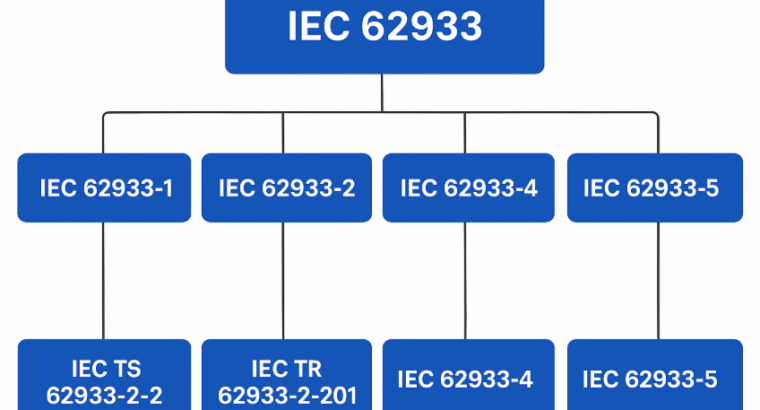
In an era defined by a rapid shift to renewable energy, electrical energy storage (EES) systems are no longer a niche technology; they are the backbone of a resilient and sustainable power grid. But what ensures these complex, high-power systems are safe, reliable, and consistent across the globe? The answer lies in a comprehensive, living framework of standards: the IEC 62933 series.
Developed by the International Electrotechnical Commission (IEC), this series is more than just a set of technical documents. It’s a blueprint for the entire EES ecosystem, from the moment a product is conceived to its final disassembly. The standards apply to systems that can absorb electrical energy from a power grid, store it, and then re-supply it, a process that can involve energy conversion. By providing a unified set of criteria for manufacturers, designers, operators, and utilities, the IEC 62933 series is helping to streamline a global industry characterized by rapid innovation and diverse applications, including commercial, industrial, residential, and utility-scale deployments.
The Global Language of Energy Storage: IEC 62933-1
Before you can build a global industry, you need a shared language. That’s precisely the role of IEC 62933-1, the foundational document of the series. The latest edition, IEC 62933-1:2024, is a significant technical revision from its 2018 predecessor. This overhaul highlights the incredible pace of the energy storage sector, where new terms and concepts have emerged in just a few short years, necessitating a complete revision to include new entries developed since the first edition.
The importance of this unified vocabulary cannot be overstated. Without it, ambiguities in unit parameters, test methods, planning, installation, and safety could introduce significant risks and inefficiencies. The standard’s impact is already being felt on a global scale. Its recent approval as a European Norm (EN IEC 62933-1:2024) by CENELEC means that it is now a formal regulatory requirement in a major market, with a clear timeline for adoption by national bodies.
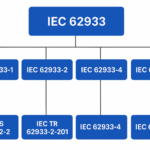
Table 1: A Glimpse into the IEC 62933 Standard Series
| Standard Name | Full Title | Publication Year | Type | Primary Scope/Purpose |
| IEC 62933-1 | Electrical energy storage (EES) systems – Part 1: Vocabulary | 2024 (Ed. 2.0) | International Standard | Defines key terms for unit parameters, testing, planning, installation, operation, safety, and environmental issues. |
| IEC 62933-2-1 | Electrical energy storage (EES) systems – Part 2-1: Unit parameters and testing methods – General specification | 2017 (Ed. 1.0) | International Standard | Outlines general unit parameters and testing methods for EES systems. |
| IEC TS 62933-2-2 | Electrical energy storage (EES) systems – Part 2-2: Unit parameters and testing methods – Application and performance testing | 2022 (Ed. 1.0) | Technical Specification | Defines testing methods and duty cycles to validate system performance for various applications. |
| IEC TS 62933-2-3 | Electric Energy Storage (EES) Systems – Part 2-3: Unit parameters and testing methods – Performance assessment test during site operation | 2025 (Ed. 1.0) | Technical Specification | Specifies unit parameters and testing methods for post-commissioning performance assessment. |
| IEC TR 62933-2-201 | Electrical energy storage (EES) systems – Part 2-201: Unit parameters and testing methods – Review of testing for battery energy storage systems (BESS) for the purpose of implementing repurpose and reuse batteries | 2024 (Ed. 1.0) | Technical Report | Explores the technical and legislative aspects of using repurposed and reused batteries in BESS through case studies. |
| IEC 62933-4-2 | Electric energy storage (EES) systems – Part 4-2: Guidance on environmental issues – Assessment of the environmental impact of battery failure in an electrochemical based storage system | 2025 (Ed. 1.0) | International Standard | Defines requirements for evaluating the negative environmental impact of battery failure in BESS. |
| IEC 62933-4-4 | Electrical energy storage (EES) systems – Part 4-4: Environmental requirements for battery-based energy storage | 2023 (Ed. 1.0) | International Standard | Provides requirements for identifying and preventing environmental issues related to the use of reused batteries in BESS. |
| IEC 62933-5-1 | Electrical energy storage (EES) systems – Part 5-1: Safety considerations for grid-integrated EES systems – General specification | 2024 (Ed. 1.0) | International Standard | Specifies general safety considerations, including hazard identification and risk assessment, for grid-integrated EES systems. |
| IEC 62933-5-2 | Electrical energy storage (EES) systems – Part 5-2: Safety requirements for grid-integrated EES systems – Electrochemical-based systems | 2020 (Ed. 1.0) | International Standard | Defines specific safety requirements for electrochemical EES systems. |
| IEC 62933-5-3 | Electrical energy storage (EES) systems – Part 5-3: Safety requirements for grid-integrated EES systems – Performing unplanned modification of electrochemical based system | 2023 (Ed. 1.0) | International Standard | Applies to unplanned modifications of BESS, such as changes in chemistry, capacity, or component use. |
Export to Sheets
From the Factory to the Field: Performance and Testing
The IEC 62933-2 subseries takes us from the foundational vocabulary to the technical heart of the matter: how to prove an EES system works as promised. These documents provide the specific methodologies for evaluating the performance and reliability of systems throughout their entire service life.
IEC 62933-2-1:2017 lays out the general parameters and testing methods , while IEC TS 62933-2-2:2022 defines the specific testing and duty cycles needed to validate an EES system for various applications. A strategic new addition, IEC TS 62933-2-3, is set for publication in 2025 and will extend the performance assessment beyond initial commissioning to a system’s entire operational lifespan. This means that compliance is no longer a one-time event, but an ongoing commitment.
A Second Act for Batteries: The Circular Economy
One of the most innovative and forward-looking aspects of the IEC 62933 series is its embrace of the circular economy. The inclusion of IEC TR 62933-2-201:2024 is a testament to this, as it provides guidance on the necessity of reusing and repurposing batteries—especially from electric vehicles (EVs)—for new Battery Energy Storage Systems (BESS). The report, which includes case studies from various countries, investigates the complexities of designing, manufacturing, testing, and operating BESS with these reused batteries.
This focus on reuse is not an isolated effort. It’s part of a connected framework that also addresses environmental requirements for reused batteries in IEC 62933-4-4 and the safety implications of such modifications in IEC 62933-5-3. This unified approach ensures that as the industry evolves to become more sustainable, it remains just as committed to safety and reliability.
Safety and the Global Harmonization of Standards
When it comes to high-power energy systems, safety is non-negotiable. The IEC 62933-5 subseries provides a robust framework to manage the inherent risks. IEC 62933-5-1:2024, now a full international standard, outlines general safety considerations, including hazard identification and risk mitigation.
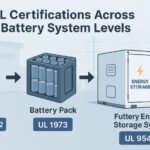
For the vast majority of BESS applications, the specific safety requirements are detailed in IEC 62933-5-2:2020. A key point of global synergy is found within this document: it explicitly references UL 9540A as a suitable test method for evaluating thermal runaway and fire propagation in lithium-based systems. This is a massive win for the industry, as a single, comprehensive test can help satisfy requirements in both the international IEC framework and the prominent North American UL framework, simplifying product development and certification for companies aiming to compete globally.
Companies are already leveraging this. For example, TWS Technology actively promoted that its Max-Pro liquid-cooling ESS cabinet was certified by SGS after passing tests to the IEC 62933-5-2:2020 standard, showcasing its commitment to global safety benchmarks.
Complementing this is IEC 62933-5-3:2023, which addresses the safety requirements for “unplanned modifications” to a BESS after it’s been installed. This is crucial for real-world applications, as it covers critical changes such as alterations in capacity, component swaps (including non-OEM parts), or even the physical relocation of the system.
Environmental Stewardship: A New Level of Detail
Beyond safety, the IEC 62933 framework also provides extensive guidance on environmental responsibility. The IEC 62933-4 subseries applies principles of life cycle assessment (LCA) and life cycle thinking (LCT) to EES systems. A particularly granular document is the forthcoming IEC 62933-4-2:2025, which defines requirements for assessing the negative environmental impact caused specifically by a battery failure. It even classifies batteries by their electrolyte type—aqueous, non-aqueous, or solid—to tailor the assessment requirements.
The Bottom Line for Stakeholders
The IEC 62933 series is far more than a collection of documents; it’s a dynamic, interconnected system that is constantly evolving to meet the challenges and opportunities of the energy storage revolution. For manufacturers, project developers, and regulators, embracing this framework is a strategic imperative.
- For Manufacturers: Adopting a “design for compliance” mindset from the start is essential. By leveraging the formal convergence between IEC and UL standards, companies can drastically reduce the complexity and cost of securing global market access.
- For Project Developers: Don’t view compliance as a one-time achievement. The expansion of standards to cover post-commissioning performance and unplanned modifications means that long-term operational integrity and risk mitigation are more important than ever.
- For Policymakers: Formal adoption of the IEC 62933 series as a national standard can create a harmonized regulatory environment that protects consumers, attracts investment, and simplifies international trade.
The IEC 62933 series serves as a powerful testament to the power of standardization in accelerating the clean energy transition, ensuring that the batteries powering our future are safe, sustainable, and reliable.
Table 2: Comparative Analysis: IEC 62933 vs. UL 9540
| Standard/Framework | Issuing Body | Geographical Focus | Key Standards | Key Safety Protocol |
| IEC 62933 | International Electrotechnical Commission (IEC) | Global (Strong in Europe, Asia) | IEC 62933-1 (Vocabulary), IEC 62933-5-2 (Safety), IEC 62933-4-2 (Environment) | References UL 9540A for thermal runaway testing. |
| UL 9540 | Underwriters Laboratories (UL) | North America | UL 9540 (ESS and Equipment), UL 9540A (Thermal Runaway Test Method) | The test method for evaluating thermal runaway fire propagation. |
| Relationship | Mutual reinforcement in key areas of safety testing. | IEC 62933-5-2 references UL 9540A as an example method for fire testing. |