The Ultimate Guide to BESS Thermal Management: Why it’s a Non-Negotiable for Battery Storage
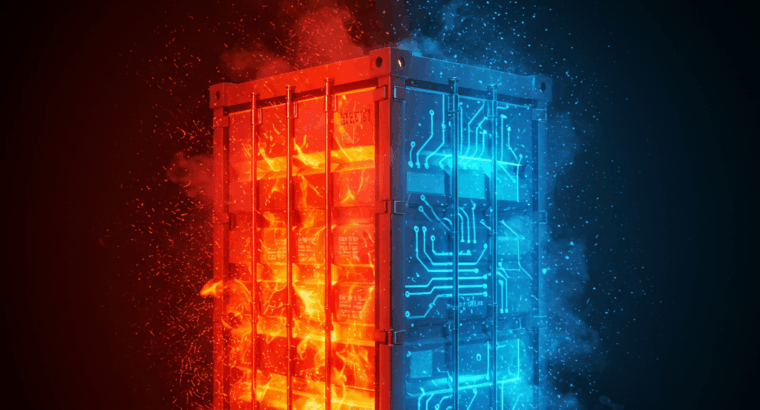
The global shift to a sustainable energy future is heavily reliant on the widespread adoption of Battery Energy Storage Systems (BESS). These powerful installations are essential for stabilizing grids, integrating intermittent renewable sources like solar and wind, and providing reliable power. BESS Thermal Management Yet, for all their technological prowess, the very heart of these systems—the lithium-ion battery—is acutely vulnerable to a silent, ever-present threat: heat.
The critical importance of thermal management is often underestimated, but it is, in fact, the single most significant factor determining a BESS‘s performance, battery lifespan, safety, and ultimate economic viability. This article delves into the intricate relationship between heat and battery health, revealing why a sophisticated thermal management system is not merely an optional feature, but a fundamental pillar of a successful energy storage project.
The Fundamental Challenge: The Battery’s “Goldilocks Zone”
At a microscopic level, a lithium-ion battery is a complex electrochemical reactor. Its performance is governed by a delicate balance of chemical reactions, primarily the intercalation and de-intercalation of lithium ions (Li+) into the anode and cathode materials. For these reactions to proceed efficiently and reversibly, they must occur within a very specific temperature window. This is the battery’s “Goldilocks Zone,” typically defined as 15−35∘C.
When the temperature exceeds this range, the rate of undesirable, parasitic side reactions accelerates dramatically. On the other hand, operating below this range significantly increases the battery’s internal resistance, leading to a loss of efficiency and capacity. Understanding these fundamental principles is the first step toward appreciating why temperature control is so crucial for heat management.
The Two-Headed Dragon: Performance & Lifespan Degradation
The most immediate and costly consequence of poor thermal management is the accelerated battery degradation. This is a two-pronged problem that affects both short-term system efficiency and long-term battery lifespan.
1. Accelerated Capacity Loss: The most common form of degradation is the irreversible loss of capacity. Elevated temperatures cause the Solid Electrolyte Interphase (SEI) layer—a crucial protective film on the anode—to grow thicker and become less stable. This process consumes active lithium ions and reduces the battery’s ability to store and release energy. The impact is exponential; a common rule of thumb in the industry suggests that for every 10∘C increase in average operating temperature, a battery’s useful lifespan can be halved.
Data from controlled studies confirms this, showing that a battery maintained at 40∘C can retain only 65% of its capacity after one year, while a similar battery at 60∘C may lose over 60% of its capacity in the same timeframe. This is a direct hit to the investment, as a BESS‘s value is directly tied to its energy throughput and longevity.
2. Uneven Degradation and Module Failure: A BESS is not a single battery but a collection of thousands of cells organized into modules and racks. Without a robust thermal management system, it is nearly impossible to maintain a uniform temperature across all cells. This temperature variance leads to a phenomenon known as cell-to-cell performance imbalance. Cells that operate at a higher temperature will degrade faster than their cooler counterparts. This creates a domino effect: the weakest, hottest cells become the bottleneck for the entire module, reducing its total capacity and eventually leading to premature failure. Replacing a single module is an expensive, labor-intensive task that could have been avoided with better thermal control.
The Ultimate Threat: Thermal Runaway and Safety
Beyond performance and economic concerns, poor thermal management poses a grave safety risk. The most severe consequence is thermal runaway, a self-sustaining positive feedback loop of heat generation that can lead to fire, explosion, and the release of toxic gases.
The process is initiated when a cell generates heat faster than its cooling system can dissipate it. The rising temperature then causes exothermic chemical reactions to begin, which in turn generate even more heat. This creates a runaway chain reaction that can propagate to neighboring cells, causing a cascading failure throughout the entire module or even the entire BESS container.
The triggers for this catastrophic event can be manifold:
- Overcharging: Pushing a battery beyond its voltage limits stresses the internal chemistry.
- Internal Short Circuits: Manufacturing defects, mechanical stress, or dendrite formation can cause internal shorts.
- Physical Damage: An external impact can deform a cell and compromise the integrity of its internal structure.
- External Heat: A failure in the cooling system or an external heat source can raise the cell’s temperature to a critical point, lowering the threshold for thermal runaway.
Mitigating this risk requires a multi-layered approach. A sophisticated Battery Management System (BMS) is essential for monitoring individual cell temperatures, voltages, and currents. However, the TMS is the first and most critical line of defense, actively preventing the thermal conditions that lead to runaway in the first place.
The Economic Equation: From CAPEX to LCOS
The financial implications of thermal management extend far beyond the initial cost of the cooling system. They fundamentally alter the entire economic model of a BESS project. The impact can be seen in both capital expenditures (CAPEX) and operational expenses (OPEX).
- CAPEX: Poor thermal management accelerates battery degradation, forcing earlier replacement of modules and racks. This directly increases the total CAPEX over the project’s lifetime. A system designed for a 15-year life might only last 8-10 years without proper thermal control, requiring a massive re-investment.
- OPEX: Inefficient cooling systems themselves consume a significant amount of electricity. Air conditioning units or liquid pumps running constantly to compensate for a poor design can become a major parasitic load, driving up the BESS‘s operational electricity costs and reducing its net energy output.
The most comprehensive way to evaluate the financial health of a BESS is through the Levelized Cost of Storage (LCOS). This metric measures the total cost per unit of energy delivered over a system’s lifetime. The LCOS is highly sensitive to both the total cost of the system and its total energy throughput. A well-designed thermal management system lowers the LCOS by:
- Extending Lifespan: Increasing the total energy the system can deliver before replacement.
- Improving Efficiency: Reducing parasitic loads, meaning more of the stored energy can be sold.
In essence, a small investment in a high-quality TMS can lead to a significantly lower LCOS, making the project more profitable and competitive.
The Spectrum of Solutions: A Deep Dive into TMS Technologies
A variety of thermal management technologies exist, each with its own pros, cons, and ideal applications. The choice of TMS depends on factors like cost, power density, and the required cooling performance.
- Air Cooling (Forced Convection): This is the simplest and most common active TMS. It uses fans to circulate air through the battery pack. While relatively inexpensive and simple to maintain, it has a low heat transfer coefficient and struggles to maintain temperature uniformity in large, densely packed BESS containers. It is best suited for smaller systems or those in very mild climates.
- Liquid Cooling: This is the most prevalent solution for modern, large-scale BESS. A fluid with a high heat transfer coefficient, such as a water-glycol mixture, is circulated through plates or jackets in direct contact with the battery cells or modules. This method is highly effective, provides excellent temperature uniformity, and is more energy-efficient than air cooling. Its complexity and potential for leaks are its main drawbacks.
- Phase Change Materials (PCMs): A passive thermal management solution, PCMs are materials that absorb heat as they transition from a solid to a liquid state, all while maintaining a near-constant temperature. They are excellent for mitigating short, high-temperature events (like rapid charging/discharging) without the need for active components. However, PCMs have a limited heat capacity and require a cool-down period to re-solidify, making them unsuitable as a standalone solution for sustained high heat.
- Immersion Cooling: The most advanced and efficient TMS technology involves submerging battery cells directly in a dielectric (non-conductive) fluid. This provides unparalleled heat transfer efficiency and temperature uniformity. It also acts as an inherent fire suppression system, making it incredibly safe. Immersion cooling is a newer technology and comes with a higher initial cost and the need for specialized fluids, but its benefits are significant for ultra-high-performance applications.
The Future of Thermal Management: Smart and Sustainable
As BESS technology evolves, so too will thermal management. The next generation of TMS will be smart, utilizing machine learning and predictive analytics to optimize cooling strategies. These intelligent systems will be able to predict thermal events before they occur, dynamically adjust cooling based on grid stabilization demands, and further reduce parasitic loads, pushing the boundaries of what is possible in energy storage.
Conclusion
Thermal management is a topic that is often overlooked in favor of more glamorous discussions about cell chemistry and grid integration. However, it is the invisible hand that guides a BESS‘s journey from a promising technology to a reliable, profitable asset. By understanding the profound impact of heat on performance, safety, and economics, developers and operators can make informed decisions that protect their investments and ensure the long-term success of the renewable energy transition. A robust thermal management system is not just an add-on; it is the lifeblood of a healthy, sustainable, and powerful battery storage system.