
The Cost of Inaction Is Higher Than the Cost of Investment
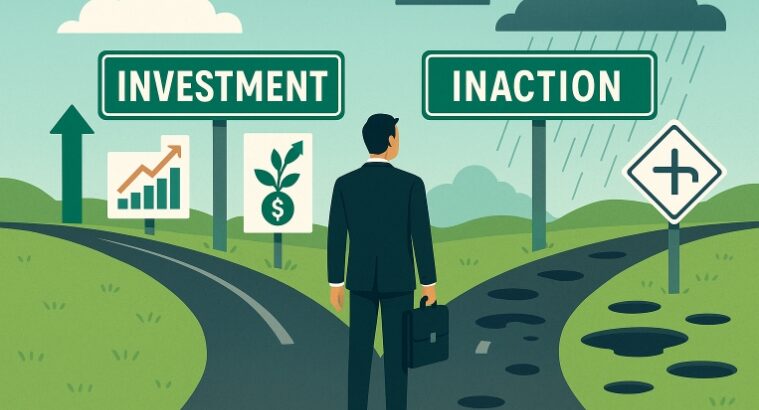
Cost of Inaction: In business, every decision carries a cost. But what many fail to recognize is that not making a decision—or putting it off—is often the most expensive one of all. Whether you’re considering investing in sales training, upgrading tools, expanding your team, or adopting new technologies, waiting too long can cost you far more than moving forward.
Let’s dive into why the cost of inaction is often a silent business killer—and why smart investments are actually the cheaper, more strategic route in the long run.
1. Inaction Breeds Stagnation
When you delay taking action, you’re not just standing still—you’re falling behind. Markets evolve. Competitors move forward. Customers expect more.
A business that waits too long to invest in its growth—whether through people, tools, or processes—gets outpaced quickly. What could have been a competitive edge today becomes a catch-up game tomorrow.
Example:
A company that delays digital transformation in sales ends up losing clients to tech-savvy competitors already using automation, CRMs, and AI-driven outreach.
2. Missed Opportunities Are Real Costs
Every month you delay an investment in your sales team, your product training, or customer support, you lose out on real sales, satisfied customers, and increased loyalty. These missed opportunities are rarely visible on a balance sheet—but they hit where it hurts.
Think about it:
If a Think about it:
If a $10,000 investment in team training could help generate $100,000 in new business, delaying it costs you $90,000 in lost opportunity0,000 investment in team training could help generate Think about it:
If a $10,000 investment in team training could help generate $100,000 in new business, delaying it costs you $90,000 in lost opportunity00,000 in new business, delaying it costs you $90,000 in lost opportunity. That’s the invisible price of inaction.
3. Problems Don’t Solve Themselves—They Get Bigger
Waiting to fix weak areas—like a poor sales funnel, low team morale, or outdated tools—only makes the problem harder (and more expensive) to fix later.
Procrastination in addressing internal inefficiencies or skill gaps allows bad habits and burnout to take root.
By the time you act, you’re no longer dealing with a simple fix—you’re looking at damage control.
4. Inaction Damages Reputation
In today’s fast-paced world, customers can sense when your company is falling behind. Late responses, confused sales reps, or outdated service processes don’t just frustrate—they damage your brand.
Investing in your team and infrastructure now helps ensure that you remain reliable, competitive, and respected.
5. Talent Loss Is an Expensive Consequence
Employees want to grow. When you don’t invest in their skills, tools, or professional development, they disengage. The best talent won’t wait—they’ll move to a company that prioritizes their growth.
Replacing a lost employee is far more expensive than investing in their retention.
Cost of replacing an employee:
According to studies, it can cost up to 200% of an employee’s salary to replace them. Wouldn’t it be smarter to spend 10–20% on training and development?
6. Momentum Is Priceless
Once you lose momentum, it’s hard (and costly) to rebuild. Customers forget, leads go cold, and your team starts questioning the direction of the business.
Small, consistent investments fuel ongoing momentum. On the other hand, inaction causes a slow decline that may not be noticeable—until it’s too late.
7. Inflation Makes Waiting More Expensive
Let’s not forget: money today is worth more than money tomorrow. Costs rise. Budgets shrink. What seems like a “savings” today often becomes a higher bill later.
Delaying upgrades, expansion, or training might feel like cost-saving—but inflation, vendor price hikes, and operational setbacks will eventually make the same investment cost more later.
8. The Confidence Factor: Action Inspires Leadership
Taking decisive action builds confidence—both internally and externally. Your team sees a leader who invests in progress. Your clients feel trust in your stability and innovation. Your stakeholders notice movement.
On the flip side, indecision signals doubt. And no one wants to follow or invest in doubt.
Conclusion: Action Is an Investment—Inaction Is a Risk
Every business owner must weigh costs. But it’s critical to understand that inaction is not “free.” In most cases, it’s the most expensive choice you can make.
Smart, timely investments—whether in training, technology, or talent—don’t just offer returns. They protect you from stagnation, loss, and irrelevance.
So ask yourself:
- What’s the cost of doing nothing?
- What opportunities are you leaving on the table?
- Can your business afford to wait?
Remember: The longer you wait, the more you pay.

Comments are closed.




[…] ✅ Your sales team is the revenue engine of your business✅ Bad sales reps can damage your brand and lose leads✅ Product knowledge and sales skills require continuous training✅ Investing in sales boosts morale, performance, and loyalty✅ Without proper sales support, your product is just a shelf item✅ The cost of inaction is higher than the cost of investment […]