
Powering a Greener Tomorrow: How BESS Drives True Decarbonization
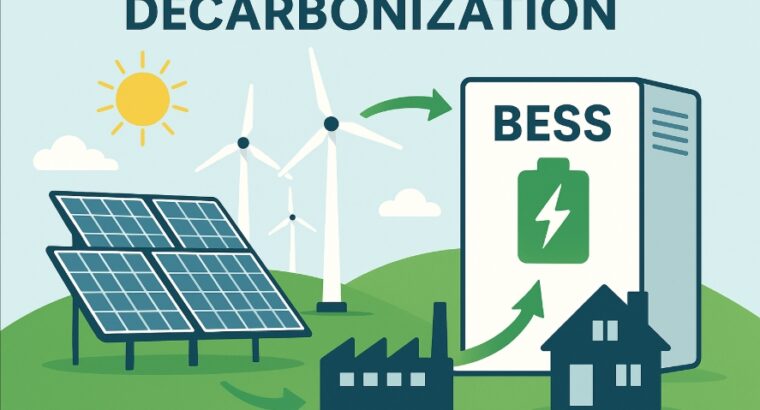
The climate crisis is one of the biggest challenges of our era — and decarbonization sits at the heart of the solution. As global temperatures rise and extreme weather becomes more frequent, governments, industries, and communities are under increasing pressure to dramatically reduce carbon emissions.
This transformation hinges on shifting away from fossil fuels toward cleaner, more sustainable energy systems. A crucial enabler of this shift is Battery Energy Storage Systems (BESS). These technologies store excess renewable energy for when it’s needed most, making intermittent renewables reliable, reducing dependency on carbon-heavy fuels, and helping stabilize modern grids.
In this post, we’ll break down what decarbonization really means, why it’s vital, the pivotal role BESS plays in it, and how it ties together the broader clean energy puzzle.
What Exactly is Decarbonization?
At its simplest, decarbonization means cutting down the carbon dioxide (CO₂) and greenhouse gases we emit into the atmosphere. This is primarily achieved by reducing our reliance on fossil fuels such as coal, oil, and natural gas, which have been the backbone of global energy for centuries.
Why Do We Need to Decarbonize?
- Limit Global Warming: The Paris Agreement aims to limit global warming to well below 2°C, ideally 1.5°C. That means slashing emissions drastically.
- Protect Ecosystems: Excessive carbon emissions drive extreme weather events, sea-level rise, and biodiversity loss.
- Improve Public Health: Lower emissions mean cleaner air and fewer pollutants, cutting respiratory illnesses.
- Ensure Economic Stability: The low-carbon transition opens up massive opportunities for green jobs, local manufacturing, and energy security.
The Major Levers of Decarbonization
Decarbonization isn’t a single solution — it’s a broad strategy involving multiple clean energy technologies and smarter ways of managing energy. Some of the key levers include:
✅ Renewable Energy Sources
Wind, solar, hydro, and geothermal produce electricity without emitting carbon during operation. The more we generate from these sources, the less we need fossil-fuel-based power.
✅ Battery Energy Storage Systems (BESS)
BESS make renewables more reliable. BESS store energy when production exceeds demand and discharge it when needed — for example, at night when solar panels don’t produce power.
✅ Smart Grids and Demand Response
Modern grids can dynamically manage supply and demand, redirecting power, and minimizing waste. Smart meters and real-time data allow consumers and utilities to optimize usage.
✅ Electrification of Transport
Switching from gasoline and diesel vehicles to electric vehicles (EVs) cuts carbon emissions in the transport sector, one of the largest global emitters.
✅ Energy Efficiency Measures
Improving the energy performance of buildings, appliances, and industrial processes reduces overall energy consumption.
✅ Emerging Technologies
Solutions like green hydrogen, carbon capture and storage (CCS), and advanced nuclear may also play a part, especially in sectors where direct electrification is difficult.
BESS: The Unsung Hero of Decarbonization
Why Energy Storage Matters
Renewable energy is variable by nature. The sun doesn’t always shine; the wind doesn’t always blow. Without storage, this variability could force grids to rely on fossil-fueled peaker plants to meet spikes in demand. This is where BESS changes the game.
How BESS Works
Battery Energy Storage Systems store electricity produced when renewable generation is high and release it when production drops or demand peaks. Modern BESS can respond within milliseconds, providing grid services that traditional plants can’t match as efficiently.
Top Benefits of BESS for Decarbonization
✅ Maximizes Renewable Integration
By storing excess solar or wind energy, BESS allows grids to absorb higher shares of renewables. Without storage, surplus energy might be curtailed (wasted).
✅ Replaces Fossil Peaker Plants
During peak demand, fossil peaker plants are expensive and carbon-intensive. BESS can dispatch clean stored energy instead, reducing emissions and costs.
✅ Enhances Grid Stability
BESS provides frequency regulation, voltage support, spinning reserve, and black start capabilities — all vital for a grid increasingly powered by variable renewables.
✅ Supports Off-Grid and Remote Areas
In island communities or off-grid sites, BESS combined with renewables can drastically reduce diesel generation, which is costly and polluting.
✅ Enables Microgrids
Local microgrids with BESS can island themselves during outages, improving energy resilience for critical facilities like hospitals and emergency shelters.
Real-World Impact: A Practical Example
Take the Hornsdale Power Reserve in South Australia — one of the world’s largest lithium-ion BESS projects. Since commissioning:
- It has prevented millions of kilograms of CO₂ emissions by displacing fossil fuel peaker plants.
- It has lowered grid stabilization costs by tens of millions of dollars.
- It’s proven that BESS can deliver grid services faster and more reliably than traditional plants.
What’s Driving BESS Adoption Globally?
- Falling Costs: The cost of lithium-ion battery packs has dropped by over 80% in the last decade.
- Policy Support: Many governments now incentivize storage alongside renewable projects.
- Corporate Net-Zero Targets: Businesses want cleaner, more resilient power for operations.
- Technological Innovation: New chemistries like solid-state and semi-solid batteries promise even better performance and sustainability.
Challenges to Consider
Decarbonization with BESS isn’t without challenges:
- Upfront Investment: BESS projects still require significant capital.
- Resource Supply Chains: Sustainable mining and recycling for materials like lithium, cobalt, and nickel is critical.
- Policy Frameworks: Clear regulations and market structures are needed to reward storage for the services it provides.
Despite these hurdles, the trend is clear: battery storage is an essential pillar of the clean energy transition.
How You Can Support Decarbonization
✅ Switch to Green Energy: Choose a utility provider that invests in renewables and storage.
✅ Consider Home Energy Storage: Pair rooftop solar with a home battery to reduce reliance on the grid.
✅ Advocate for Clean Policies: Support local and national policies that fund clean energy infrastructure and BESS.
✅ Educate and Collaborate: Spread the word about the benefits of storage and renewables to drive collective action.
Final Thoughts
Decarbonization is more than just cutting emissions — it’s about transforming our entire energy system for a cleaner, more resilient future. Battery Energy Storage Systems empower us to unlock the full potential of renewables, stabilize our grids, and move beyond the old fossil fuel paradigm.
As individuals, businesses, and communities, we each have a role to play in this transition. Every step counts — and every kWh stored cleanly is a step closer to net zero.
FAQs: Decarbonization & BESS
Q1: Is BESS only for large utility companies?
No — residential and commercial users can benefit from BESS by storing rooftop solar power, lowering peak costs, and boosting energy independence.
Q2: What happens to batteries when they reach end-of-life?
Second-life applications (like stationary storage) and advanced recycling technologies help reduce waste and recover valuable materials.
Q3: Can BESS help during power outages?
Absolutely! Home or community-scale BESS can provide backup power when the main grid goes down.
Q4: How does BESS compare to other forms of storage?
While batteries dominate short-duration storage, other forms like pumped hydro or green hydrogen are emerging for long-duration needs.
Q5: How fast is the BESS market growing?
According to analysts, global battery storage capacity is expected to grow more than tenfold by 2030, driven by falling costs and supportive policies.


Comments are closed.


[…] solar systems don’t just benefit the individual user; they can also be a boon for the broader …. When thousands of homes and businesses have their own power generation and storage, it reduces the […]